 English
 Tiếng Việt
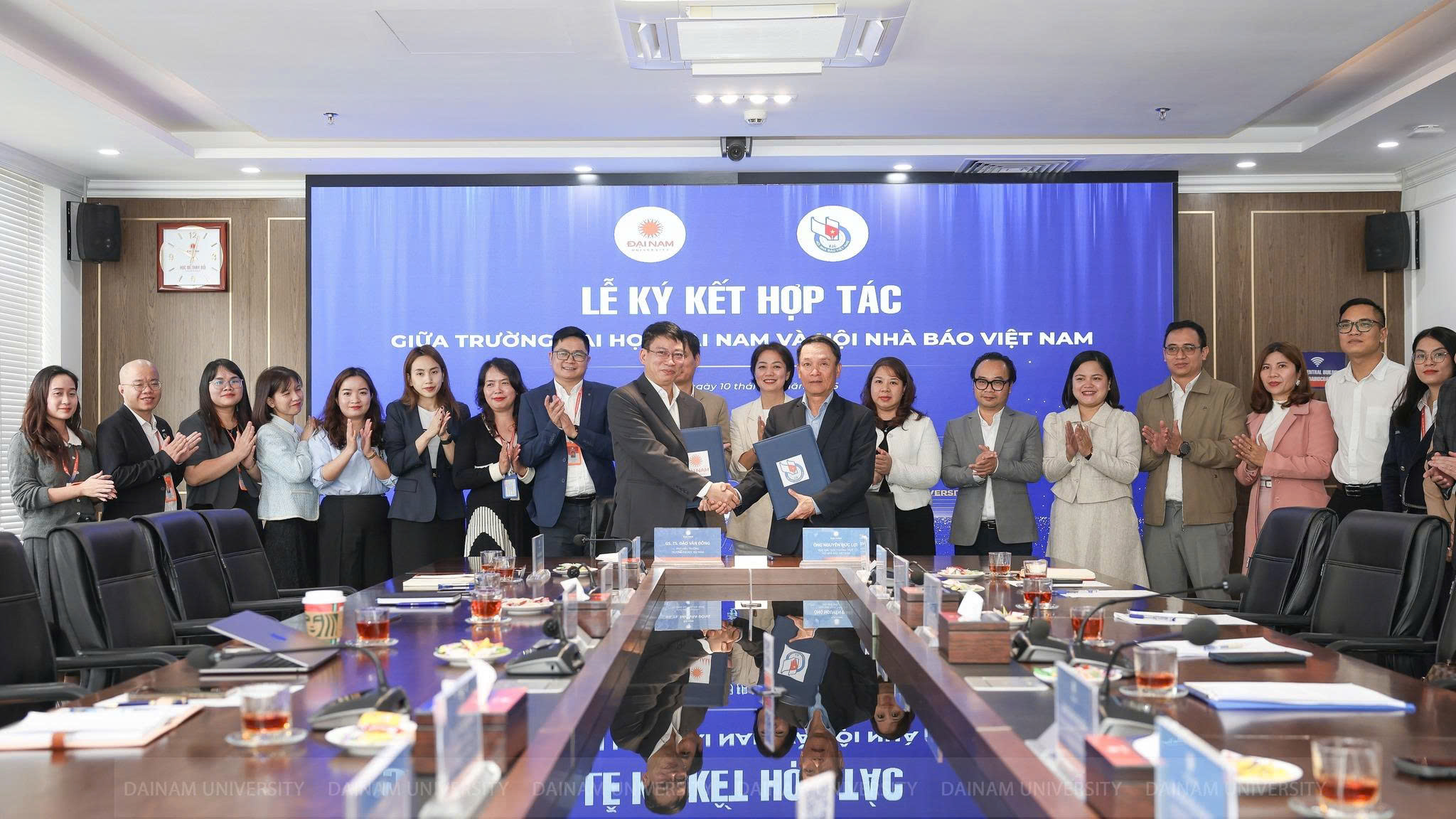
Dai Nam University attended the signing ceremony of Phase 4 Memorandum of Understanding




Within the framework of cooperation between the Ministry of Science and Technology, represented by the National Research and Development Center for Open Technology (RDOT), Carnegie Mellon University Australia, represented by the Open Technology Center (OTF) and the European Commission, represented by the Directorate for Information Technology (DIGIT) for Open Technology, RDOT is the unit responsible for operating and developing the OpenRoad project in Vietnam.
About the OpenRoad platform:
OpenRoad is an open collaboration platform system that Vietnam received technology transfer and localization from the original OpenRay platform developed by OTF Center in June 2012 based on the Joinup platform, developed by the European Commission through the Interoperability Solutions for Public Administrations (ISA) Program. This platform complies with the GNU GPLv2 open source license.
The OpenRoad pilot project, in addition to being a potential project for building a portal to share all information about open source free software projects in Vietnam, is also the first project in Vietnam with the full participation of 4 components: the state, businesses, institutes - universities and the community of programmers, developing together with the international community according to the development model of open source free software in the world.
More importantly, OpenRoad is an environment that brings together open source communities from collective units and individuals in Vietnam, capable of working not only with other open source communities in Vietnam, but also with open source communities of participating countries in cooperation, and more broadly with the world. Through that, the Vietnamese open source community has the opportunity to learn to participate in developing open source solutions, products and services together and inseparable from the world's open source communities in a large globalized playground.
On the development of OpenRoad:
OpenRoad has gradually matured through each phase of the project. The number of participating units in the project increased from 4 units in phase 1 at the beginning of the project in December 2012, to 9 units in phase 2, to 16 units in phase 3 and now 22 units in phase 4. Among them are 10 IT companies, all members of the Vietnam Free and Open Source Software Association (VFOSSA), 8 universities, 1 research institute, 1 provincial ICT center, 1 association unit and 1 government unit, the National Research and Development Center for Open Technology under the Ministry of Science and Technology.
The number of component projects in OpenRoad has also increased gradually. If in phase 1 there was only 1 software when receiving technology transfer, then up to now there have been many component projects with open source software such as Drupal electronic portal, Zimbra and OBM email, Alfresco document management system, Koha integrated electronic library system, Dspace electronic content management software, Moodle electronic learning software, and in this phase 4, open source document management and management software for departments and branches, OpenPGP open source data encryption software and especially Vietnamese open source accounting software has been added.
Up to now, OpenRoad has persisted in its development path, focusing on system integration work. In addition to the first phase of technology transfer, OpenRoad's phase 2 focused on integrating software of component projects to create a single login system, the success of which was the necessary basis for phase 3 to focus on integrating public key infrastructure (PKI) based on open technologies to perform authentication, digital signature, encryption - decryption of some necessary transactions in OpenRoad's component projects. In phase 4, OpenRoad continues to focus on solving integration problems on a broader and deeper scale.
Companies participating in OpenRoad have matured in software development that adheres to the principles of open source development, work collaboratively with each other with source code that is fully public on the GitHub repository, and have also made initial contributions back to the open source community that are recognized and used by the world.
The company-to-company and company-to-university collaboration within OpenRoad has also yielded initial results that have helped companies become better able to do business based on services around free and open source software, and helped universities gradually build open source developer communities, supporting the development and provision of open source services by companies and helping to link learning with practice at universities.
The Dean of the Faculty of Information Technology, Dai Nam University, with the core being the student free software club, has actively participated in the project since phase 3 with the task of cooperating with D&L Company in developing and deploying KOHA electronic library applications and DSPACE digital library; integrating into the OpenRoad system.
Summarizing the activities of phase 3, Mr. Le Trung Nghia highly appreciated the community development results of Dai Nam University and set the goal of continuing to replicate the results achieved by Dai Nam University during the implementation of phase 4.
Within the framework of cooperation between the Ministry of Science and Technology, represented by the National Research and Development Center for Open Technology (RDOT), Carnegie Mellon University Australia, represented by the Open Technology Center (OTF) and the European Commission, represented by the Directorate for Information Technology (DIGIT) for Open Technology, RDOT is the unit responsible for operating and developing the OpenRoad project in Vietnam.
About the OpenRoad platform:
OpenRoad is an open collaboration platform system that Vietnam received technology transfer and localization from the original OpenRay platform developed by OTF Center in June 2012 based on the Joinup platform, developed by the European Commission through the Interoperability Solutions for Public Administrations (ISA) Program. This platform complies with the GNU GPLv2 open source license.
The OpenRoad pilot project, in addition to being a potential project for building a portal to share all information about open source free software projects in Vietnam, is also the first project in Vietnam with the full participation of 4 components: the state, businesses, institutes - universities and the community of programmers, developing together with the international community according to the development model of open source free software in the world.
More importantly, OpenRoad is an environment that brings together open source communities from collective units and individuals in Vietnam, capable of working not only with other open source communities in Vietnam, but also with open source communities of participating countries in cooperation, and more broadly with the world. Through that, the Vietnamese open source community has the opportunity to learn to participate in developing open source solutions, products and services together and inseparable from the world's open source communities in a large globalized playground.
On the development of OpenRoad:
OpenRoad has gradually matured through each phase of the project. The number of participating units in the project increased from 4 units in phase 1 at the beginning of the project in December 2012, to 9 units in phase 2, to 16 units in phase 3 and now 22 units in phase 4. Among them are 10 IT companies, all members of the Vietnam Free and Open Source Software Association (VFOSSA), 8 universities, 1 research institute, 1 provincial ICT center, 1 association unit and 1 government unit, the National Research and Development Center for Open Technology under the Ministry of Science and Technology.
The number of component projects in OpenRoad has also increased gradually. If in phase 1 there was only 1 software when receiving technology transfer, then up to now there have been many component projects with open source software such as Drupal electronic portal, Zimbra and OBM email, Alfresco document management system, Koha integrated electronic library system, Dspace electronic content management software, Moodle electronic learning software, and in this phase 4, open source document management and management software for departments and branches, OpenPGP open source data encryption software and especially Vietnamese open source accounting software has been added.
Up to now, OpenRoad has persisted in its development path, focusing on system integration work. In addition to the first phase of technology transfer, OpenRoad's phase 2 focused on integrating software of component projects to create a single login system, the success of which was the necessary basis for phase 3 to focus on integrating public key infrastructure (PKI) based on open technologies to perform authentication, digital signature, encryption - decryption of some necessary transactions in OpenRoad's component projects. In phase 4, OpenRoad continues to focus on solving integration problems on a broader and deeper scale.
Companies participating in OpenRoad have matured in software development that adheres to the principles of open source development, work collaboratively with each other with source code that is fully public on the GitHub repository, and have also made initial contributions back to the open source community that are recognized and used by the world.
The company-to-company and company-to-university collaboration within OpenRoad has also yielded initial results that have helped companies become better able to do business based on services around free and open source software, and helped universities gradually build open source developer communities, supporting the development and provision of open source services by companies and helping to link learning with practice at universities.
The Dean of the Faculty of Information Technology, Dai Nam University, with the core being the student free software club, has actively participated in the project since phase 3 with the task of cooperating with D&L Company in developing and deploying KOHA electronic library applications and DSPACE digital library; integrating into the OpenRoad system.
Summarizing the activities of phase 3, Mr. Le Trung Nghia highly appreciated the community development results of Dai Nam University and set the goal of continuing to replicate the results achieved by Dai Nam University during the implementation of phase 4.







Register for admission consultation 2025
scholarships and tuition support worth up to 55 billion VND

scholarships and tuition support worth up to 55 billion VND

